
Marketing Confusion: AVAs and the Question of Terroir
 Winemaker Matt Dees and his colleagues at Goodland Wines in Santa Barbara, California have chosen to take a remarkable step: They have decided to purposely confuse the wine consumer in order to try to enlighten them. It’s a peculiar approach to education of which I am not completely familiar.
Here’s what’s happening: At Goodland Wines, individual bottlings don’t carry the name of the varietal. They only carry the name of the AVA or “appellation” from which the grapes were grown that went into making the wine.
According to an outstanding article by Evan Dawson at Palate Press (so many outstanding articles at that site!), the reasoning for the varietal-less labeling goes like this:
“Goodland Wines was born out of Dees’ desire to focus on what Santa Barbara County does best in each appellation. Instead of following the garish American trend of prioritizing a wine producer’s name, or the name of the grape varieties, Dees wants the appellation to stand out. It’s the old European model; think of a bottle of Morgon, or Cornas, or Volnay.”
Dawson goes on to write:
“Customers won’t necessarily know what grapes are used to make the Goodland wines, but the Goodland team believes that will spark conversation and debate.”
I think confusion will be sparked before debate.
If a label is meant to convey information about a product then consider this: no piece of information on a label tells the 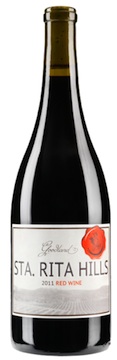 consumer more about what the bottled wine will taste like than the varietal. Not appellation. Not Vintage. Varietal. To put it another way, A single vineyard Cabernet Sauvignon from California will taste much more like a generic French Cabernet than a Pinot Noir from the same single vineyard in California. That is the power of the varietal and the deficiency of relying on “place” if your goal is to inform the consumer.
But what’s equally important about the Goodland Wines project is that it is an exercise in promoting a specific match of varietal to AVA. By choosing, for example, to put Pinot Noir in their “Sta. Rita Hills” wine and by choosing to put Sauvignon Blanc in their “Happy Canyons AVA” bottling the winery is saying that these varietals do the best job of depicting what the specific AVAs have to give to wine.
Besides the confusion that the Goodland Wines approach delivers, the other problem is that Santa Barbara County is not France. In France, there are strict rules as to which grapes may be used when calling a wine “Pomorol” or “Volnay” or “Morgon”. When you obtain a rudimentary education of French wines you learn that a Morgon tastes like Morgon because it’s produced with the Gamay grape. It’s not much different from getting a California wine education and learning that Cabernet Sauvignon tastes like Cabernet Sauvignon because only Cabernet Sauvignon can be used to make Cabernet Sauvignon.
However, unlike in France, there are no laws that say what grapes can make up a “Sta. Rita Hills” red or a “Happy Canyon White. Confusion!
On this issue of regionality, author Dawson in the Palate Press piece quotes Winemaker Dees:
“We are trying to begin the conversation about regional typicity, recognition, and the future of AVAs in this young country of ours. We’re not shooting to make enemies. We’ll be the first to admit that it will likely be a moving target — and it should be, as we continue to learn about these young regions and vineyards.”
Dees should know better. The conversation about regional typicity, recognition and the future of AVAs began a long time ago and in every significant winegrowing region in California. We’ve been talking about terroir for decades. And that includes in the Sta. Rita Hills. So, one has to wonder what question Dees is trying to pose in his AVA labeling and in forgoing varietal labeling?
The thing is this, here in California if you want to use wine to expose the meaning of terroir, the best way to do it is not by placing emphasis on an appellation. Our appellations are primarily marketing vehicles and only rarely are drawn to encompass an area that has a very well-defined set of growing characteristics or “terroir”. If you want to put terroir on display then your best bet is to focus on a single vineyard. This is where terroir and its impact on wine can really shine and educate.
But the fact is, the good folks at Goodland Wines really won’t be educating many people with their unique approach to labeling. The overwhelming and vast majority of American wine drinkers are completely unconcerned about the characteristics an AVA lends to a wine. They are instead concerned about how much liquid they can get for their money, whether the wine is red or white, whether the wine is appropriately sweet for their palate and, perhaps, whether or not they recognize the varietal on the label.
The number of wine drinkers that are interested in the philosophy and questions behind labeling a California wine by its appellation and without any reference to varietal might appropriately be called the “one percent”. And it should be noted that currently the Goodland Wines are made in miniscule amounts; reportedly no more than a couple of barrels of each wine. The debate about this approach will have to take place largely among those that have not tasted the wines.


I couldn’t agree with you more, Tom. I was going to write about this myself, but I’ll skip that now and just say “This.”