
No Wine For You, South Dakota!
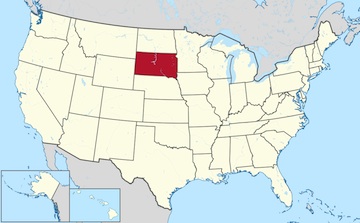 An opportunity to open the State of South Dakota for direct to consumer wine shipping failed recently when Senate Bill 114 died in the House Energy and Commerce Committee. As a result, 11 states still prohibit winery-to-consumer shipping and 35 states still prohibit retailer to consumer shipping.
Despite South Dakota not being the most populous state in the country nor a particularly important wine drinking state, the defeat of the most recent wine shipping bill there is the kind of disappointment that continues to reinforce the impression that lawmakers are far more concerned with those that provide campaign contribution than with the interests of consumers, let alone the notion of free trade.
If you are interested in listening to how opposition to direct wine shipping is asserted, this audio recording of a February 11th hearing in the South Dakota Senate Commerce and Energy Committee is available (beginning at 18:35 into the recording). Among the various arguments that are put up against direct shipping is that out-of-state wineries would not be required to pay the same license fees as in state wine stores nor be exposed to the same tax payment structure as local wine stores. This is a disingenuous argument for the simple reason that the services that South Dakota wine retailers’ fees and taxes pay for (police services, fire and emergency services, just as an example) will never be made available to out-of-state wineries. If a Oregon winery catches fire, there will be no fire trucks from South Dakota racing to McMinneville to help quell the inferno. There is no equal access to services for in-state business and out-of-state businesses. So why ought there be an equality of fees paid by in-state and out-of-state by entities.
One point made by South Dakota retailers in opposition to the direct shipping bill does make sense to me. They complained that while out-of-state wineries would be allowed to ship under this legislation, South Dakota retailers would still not have the right to ship to South Dakotans. In any future direct shipping bill, this oversight needs to be corrected. The out-of-state wineries allowed to ship under this recent wine shipping bill were in fact acting as retailers. In-state retailers should have the same rights (as should out-of-state traditional retailers, who were left out of this bill altogether just like in-state wine retailers). Whether the South Dakota wine stores even want that right is another story. At the very least, it would remove this objection from the table.


One has to remember that even though the Oregon winery will not benefit from the services provided by the tax income derived from fees on wholesalers and retailers imposed upon them, South Dakota still depends upon that income to pay for services for its citizens. As such, since all in State retail and wholesale operations are liable for them, so should their out of State counterparts.
How would you like it if a street vendor set up shop selling fruits and vegetables right in front of your grocery store, and that vendor was not liable for taxes or fees in his retail operation thereby having the ability to sell his products at a much lower price than you and your business suffers? Would that be fair and equitable? The street vendor could be forced to pay the same taxes and fees that you, as the brick and mortar are forced to pay, but how would out of State wineries do the same thing when shipping directly to someone’s home? Did we not just see this with the Amazon and on line retailer controversy with sales tax?
Ron:
The Oregon winery is not setting up business in front of a retail outlet by virtue of selling wine direct. The reason I know that is the Oregon winery, unlike the South Dakota retail shop, does not have access to the walk up or drive by shoppers that the South Dakota retailer has access to.